

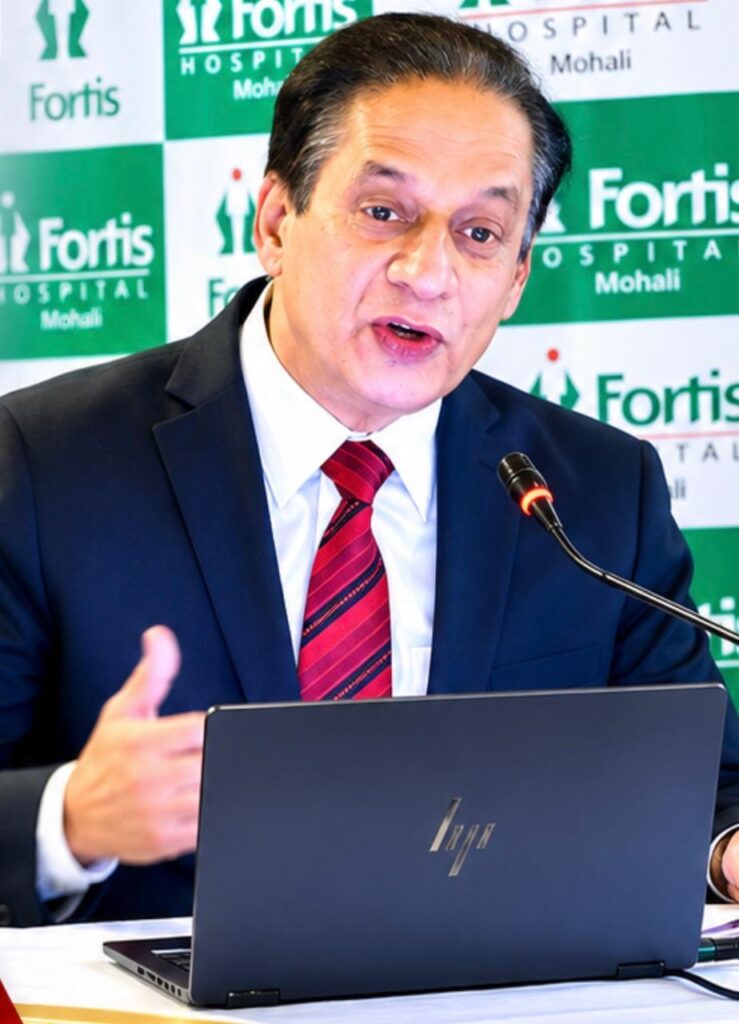
Angioplasty (Philips) at Fortis Mohali
— Dr RK Jaswal conducted ELCA, wherein high-intensity laser light was used to remove blockages in the coronary arteries of the patient —
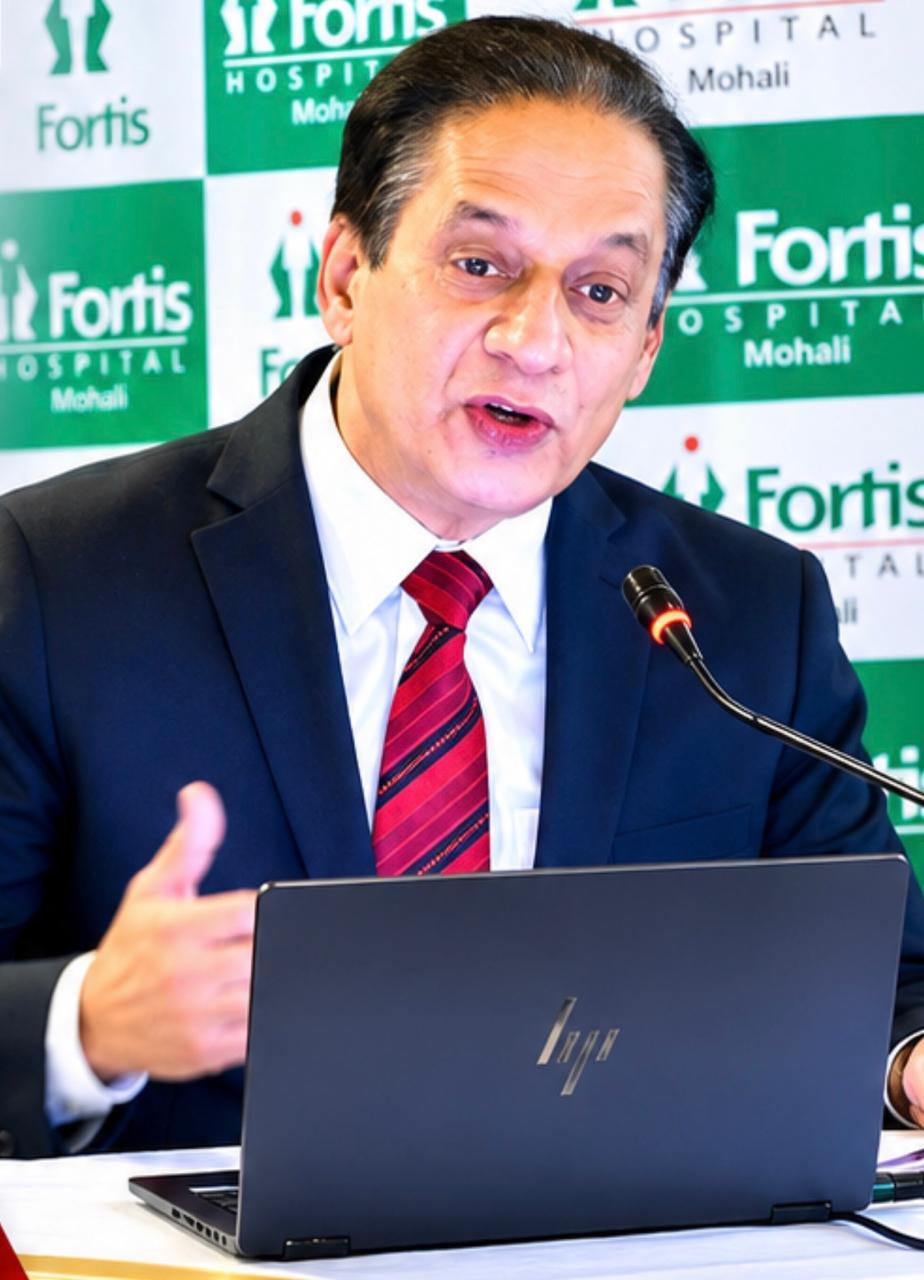
Shimla, 23rd May, 2026: The Department of Cardiology at Fortis Hospital Mohali led by Dr RK Jaswal, Head of Department and Director of Cardiology and Director – Cathlabs, recently gave a new lease of life to an 88-year-old diabetic man by the most-advanced technique of Laser Coronary Angioplasty, also known as Excimer Laser Coronary Angioplasty (ELCA), developed by Philips – India.
The Patient presented to a Patiala-based hospital with recent onset of severe angina (chest pain and pressure), and subsequently underwent angiography. The report revealed that the stents deployed in the Patient during angioplasty conducted more than 30 years ago in New Delhi, were now completely blocked with a lot of calcium and scarring.
Considering the Patient’s age, he was found unfit for an open-heart surgery. Further, angioplasty and correction of these stents by repeat stenting was also not possible. In the absence of advanced technology, which is available only in a few select hospitals across the world, the Patient was advised medical intervention. However, despite treatment, the Patient had repeated episodes of intolerable chest pain.
The Patient came to Fortis Hospital Mohali for treatment of his last-stage heart disease with very little hope left for him to lead a comfortable life. The team of doctors led by Dr RK Jaswal, Head of Department and Director of Cardiology and Director – Cathlabs, treated his critical advanced disease with the latest technique of Excimer Laser Coronary Angioplasty (ELCA), wherein a high-intensity laser light was used to remove blockages in his blocked coronary arteries. The Patient had a smooth post-operative recovery and was discharged two days after the surgery.
Discussing the case, Dr Jaswal, said, “In normal routine angioplasty and stenting, there is High-pressure balloon dilation (HPBD) of the material blocking the heart arteries, (Specialized balloon catheter is used to expand narrowed or blocked areas by inflating the balloon to a high pressure.) The violent deformation of the blockage by high pressure balloon leads to the material going into the distal branches as well as sudden blockage of the artery which has been treated by routine balloon angioplasty. In sharp contrast, ELCA leads to annihilation (converting the material blocking the artery into vapours and leaving nothing behind.) This annihilates the fat and other tissues blocking the heart arteries. Hence, in a patient who has undergone laser angioplasty (ELCA), there is no risk of sudden blockage of artery and no risk of clot formation, which can lead to repeated heart attack in 2-3% of the patients, who have undergone routine angioplasty and stenting.”
Dr Jaswal further informed that Laser Coronary Angioplasty (ELCA) was helpful in patients suffering from Coronary Heart Disease and particularly useful in conditions such as STEMI (with high load of clot) wherein laser angioplasty annihilates (leaves nothing behind) the clot. “Therefore, many young patients of heart attack do not need stent angioplasty treatment of heart attack after laser angiography (ELCA),” added Dr Jaswal.
On the benefits of Laser Coronary Angioplasty (ELCA), Dr Jaswal, added, “Patients of previous stent where the stent treatment has failed. Laser is extremely helpful in effectively re-opening the blocked artery. Laser is also helpful in small vessel, diffused disease, small vessel disease and bifurcation blockage of heart attacks.”
Dr Jaswal further, said, “Laser is extremely helpful in patients who have undergone bypass surgery in the past and come back with heart diseases again due to blocked bypass grafts. In such cases, laser can restore blood flow in the degenerated grafts much more effectively than routine angioplasty and stenting with distal protection device.”